


Spoiler-free
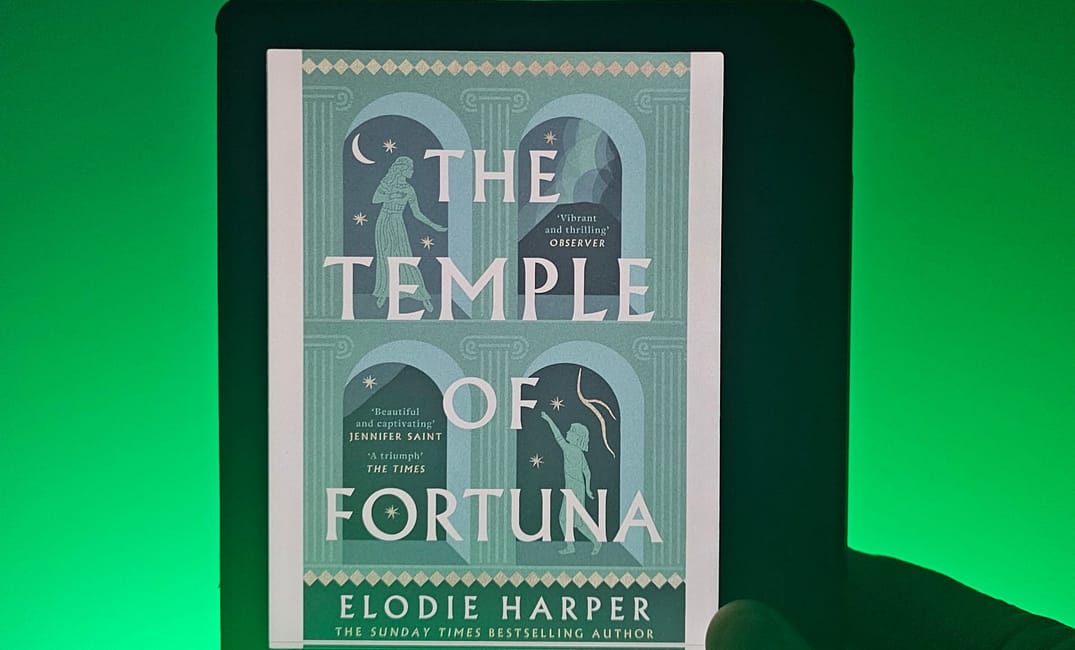
The Temple of Fortuna marks the end of the Wolf Den Trilogy. This series has been great! Despite all the various trauma the characters face, it’s been a lot of fun being immersed in ancient Pompeii. I have also started a Plebs rewatch with my Auntie, so this historical period has taken over my life it seems. I also gifted the first book - The Wolf Den - to my Auntie for Christmas, so I’m really dragging her down this rabbit hole with me it seems. Sorry not sorry!

Given that this book is the last in a series, there isn’t too much I can say in this spoiler-free section, apart from my general thoughts on the conclusion. I am satisfied. I will admit that at around the halfway mark I was worried. The first part of this book was uneventful. Even now, I am struggling to remember anything that actually happened of note in the first 100 pages or so. Fortunately, a major event happens at around the halfway point which completely alters the course of the series, and gets things back on track. This momentum carried on through right till the end, leading to a satisfying ending to an excellent trilogy.
While I enjoyed each instalment greatly, the first book is still my favourite. The themes of found family, sisterhood, power struggle, outwitting and outlasting seem to dwindle as the series progresses and shifts towards more of a forbidden romance type plot. This just doesn’t suit my personal taste so much, and even now I don’t even like the main romance. However, the characters and writing are so good that I still thoroughly enjoyed each book till its completion. There’s something about Elodie Harper’s writing style that I can absolutely devour and blitz through. It’s kind of addicting. I will be picking up Boudica’s Daughter soon, there’s no doubt about it!
🌕🌕🌕🌕🌑 4 stars
Spoiler Chat
Amara in Rome was such a drag! Well, maybe that’s unfair. Whilst I was reading, I didn’t feel like it was a chore as such, but now looking back, I struggle to think of anything interesting that happened. I did have a few days break over Christmas where I stopped reading, so there’s every possibility that I just forgot the details and nuance. However, from what I remember, there wasn't anything that was particularly interesting and I was starting to get bored...

When Amara finally goes back to Pompeii things start to get interesting again. Seeing how desperate she is to connect with her daughter - Rufina - without coming across as overbearing, was quite touching. The sacrifices Amara has made for her daughter are that of which are impossible for Rufina to understand. This creates the dynamic of Amara being evil in Rufina’s eyes, for abandoning her. It’s clear that Rufina doesn’t see Amara as a mother, but does see Philos as her father. This sucks, but Amara is determined to connect with her daughter as much as possible. Rufina does seem happy without Amara, living her life with Philos, Julia, and playing with the slave children. This must be bittersweet for Amara, who no doubt wants the best life for her child, even if she isn’t a direct part of it.
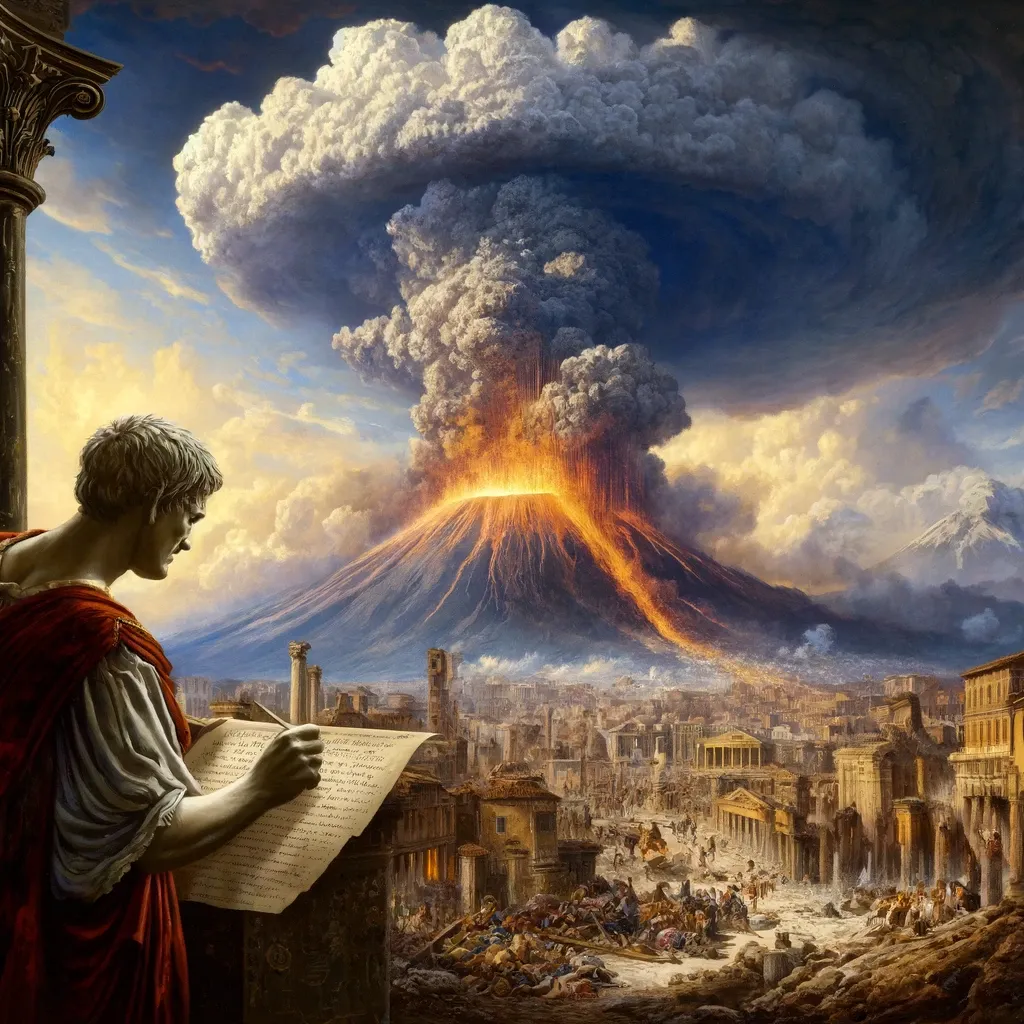
Right, so I was not expecting the eruption of Mount Vesuvius. I am sure it’s probably common knowledge, especially with Historical Fiction fans, that Pompeii was destroyed by a volcanic eruption, but this was news to me! I was shocked! Just when I started to lose interest… BOOM! Literally! The chapters of everyone in a mad rush fleeing from Pompeii were so intense and distressing, especially when certain characters decided it was best to stay under shelter as the earth violently shakes… Looking at you Julia. I knew she was a goner at that point. Good on Philos for thinking quickly on his feet and remaining calm enough to gather the troops and get a move on.
“I am Volusia,” the older woman declares when Amara enters, with the air of a hostess who is determined not to allow the impending destruction of civilization to dampen her dinner party.
So many deaths happened in quick succession, as they no doubt would have done. Britannica gets separated and is ‘dead’, but we all know the rule - no body = no death - so I didn’t believe it for a second. Pilny’s death was the only one that felt somewhat ceremonious. Ultimately he died a horrible death alone, but at least he had somewhat of a tender goodbye with Amara before she was forced to flee further.
Honestly, these post-eruption scenes were all a madness and really flipped the whole series on its head. Now slaves can take advantage of the chaos, and pretend to be freedmen and women. Who’s to know any better, when the entire city is ash and embers. Philos takes this opportunity and presents himself as not only a freedman but as Amara’s husband. This creates a power shift in their relationship, as from the outside Philos is now seen as the more powerful one, given his status as a man. This doesn’t cause any strain on their relationship though, but rather to Amara’s character. Now she must become a little more submissive, and go into her shell more not to raise too much suspicion of her past life as Amara, so that she can live her new life as Timarete. This is hard to read, as we have just spent the past 2 books getting Amara into a position of power and freedom, only to have her forced back into a more subordinate nature. It is nowhere near as awful as where we began in the Wolf Den brothel, but it is nevertheless frustrating that no matter how far you climb the ranks as a woman, men will always be deemed superior.
Amara wakes early. She did not believe that any bed would ever bring her more misery than her cell in the Wolf Den, but back then, when she dreamed of nothing but escaping Felix, she could not have imagined being crushed into a stinking tent, pitched on the bones of a dead city.
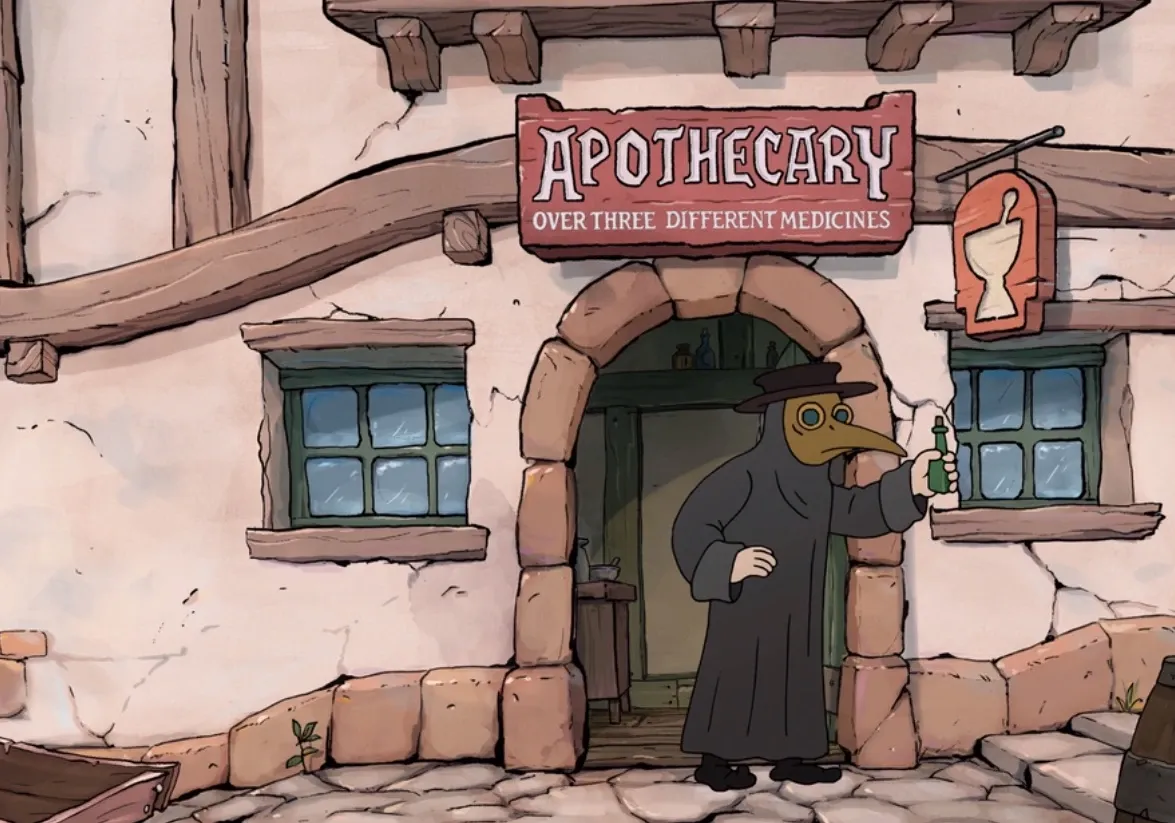
After the chaos of the eruption of Vesuvius calms down, Amara takes her former Greek name of Timarete and lives a new life with Philos and Rufina, who now also have new names (which I’m certain future Rufina will be thankful for… Still can’t get over how dumb that name sounds). I thought it was cute that they run an apothecary together, and is truly a great combination of Amara’s knowledge of natural science and Philos’ business mindset. Despite living a seemingly peaceful life, there is a dark cloud hovering over Amara everywhere she steps, the impending threat of her past ready to rain down on her at any moment. She abandoned her betrothed - Demetrius, She has disguised a slave as her husband - Philos, She is on constant edge at the return of her sworn rival, and keeper of her secrets - Felix. This is no way to live, but if she wishes to have a semi-normal life with both Philos and Rufina, these are yet more sacrifices she has to make.
As we got closer to the end I became worried that the whole Amara and Felix rivalry was going to remain unsolved. Perhaps he would become yet another victim to Vesuvius’ wrath, but no… There he was… A drunken fool, still up to his usual tricks, threatening to tell all of Amara’s secrets., Thank fuck, she finally killed him. She should have listened to Britannica way back in book 1 and just killed him there and then. It shouldn’t have taken Britannica’s ‘death’ and all this suffering to force her into this decision. Nevertheless, it is done, and it seems as though she has gotten away with it. This will no doubt be yet another secret Amara takes with her to the grave.
I’m glad that we got a conclusion to the Amara vs Felix storyline, but I can’t help but feel there was wasted potential. By the end of book 1, I was so excited for their rivalry to develop into more of a business and political direction. Perhaps Amara builds her own business of women, and works on slowly destroying all profits of the Wolf Den, thereby tarnishing everything Felix has built. Instead, we got Amara falling in love with a slave and Felix constantly blackmailing her. I still enjoyed it, but thank hell for the eruption of Vesuvius because that really saved this book for me. It was just incredibly interesting seeing how society completely shifted and knocked all balance of power off its tilt.
In the epilogue we get our first non-Amara POV. This surprised me, as it seems like an odd choice to go the whole series through Amara’s perspective, only to have a different one for the last few pages. However, I think it actually worked really well. Turns out Britannica is alive (Shock Horror) and is on the search for Fighter (Rufina). She doesn’t want to risk putting Amara in danger so instead of actively asking around to try and find them, she works on building a name for herself as a gladiator, to have them find her.

Hell yeah! This is so cool! I honestly love this for Britannica and it makes perfect sense. I’m not even bothered that we don’t get a reunion scene, because It’s really nice having this traumatic series end with this sense of love and hope. We know Britannica is a badass, and we know that Amara is astute and observant. Therefore, we know they will be reunited one day and just the thought of that is enough to make this ending hopeful, and satisfying.
It’s been a wild ride, and what a journey it was! While it didn’t take the direction in which I hoped for, it surprised me by how much I still ended up loving the sequels despite the central focus on a romance I didn’t care for. That just goes to show how skilled of an author Elodie Harper is and I wouldn’t hesitate to pick up any of her future books!
Thanks for reading! - Ang

Comments